

Protecting Your Pool During Winter Storms in Charlotte

Updated: Mar 2
The Golden Rule: Keep the Water Moving
The single most important thing you can do during a freeze is to keep your pump running 24/7. Moving water is much harder to freeze than stagnant water. If your system has a "Freeze Protection" mode, ensure it is active. If not, manually turn your pump on and leave it on until temperatures stay consistently above 32°F.
What if I don't have "Anti-Freeze" settings?
If your equipment doesn't have an automated freeze sensor, don't panic. You can manually protect your system by:
Continuous Circulation: Manually override your timers to run the pump around the clock.
Open All Valves: Ensure water is flowing through every pipe. If a line is closed, the water trapped inside can freeze, expand, and crack the pipe.
Insulation: In a pinch, you can wrap exposed equipment-side pipes with heavy blankets or towels and secure them with a tarp. Just be careful not to block the motor’s air vents!
Should I keep water features running?
Yes. Fountains, waterfalls, and sheer descents should remain active. The plumbing for these features is often more shallow or exposed than the main pool lines, making them the first to freeze. If you can’t run them, they must be fully drained.
What to Look For: Signs of Equipment Trouble
Keep a close eye on your equipment pad. Here is what to watch for:
Strange Noises: A loud screeching or grinding could mean the pump is struggling with ice or losing prime.
Ice on the Pump: If you see ice forming on the exterior of your pump or filter, it’s a sign that the ambient temperature is winning.
Low Water Level: If the snow or ice causes your water level to drop below the skimmer, your pump will "suck air," lose prime, and likely freeze up. Keep your water level at the midpoint of the skimmer.
Dealing with Leaks During a Storm
If you notice you are losing water faster than usual even with the snow, you might have a winter leak.
Important: Never drain your pool during a freeze. The water provides the necessary pressure to keep the pool shell from "popping" or cracking due to shifting frozen ground.
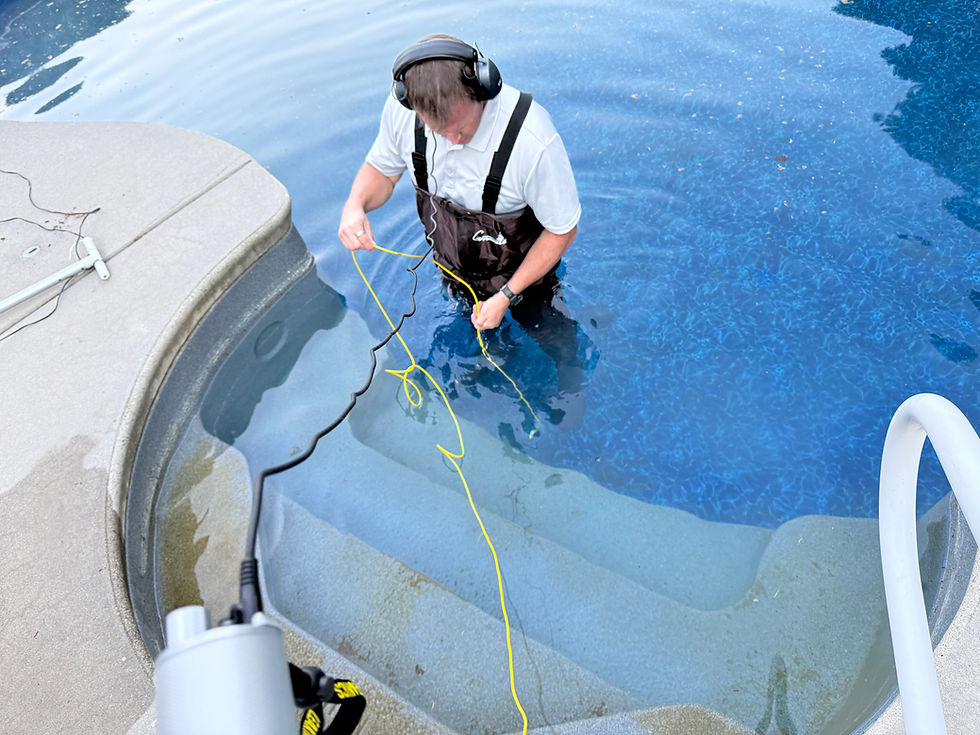
At Sunkissed Pools And Spas, we specialize in Advanced Leak Detection. Using specialized sonar and pressure-testing equipment, we can locate:
Structural cracks in the shell.
Underground plumbing failures.
Leaking light niches or fittings.
Equipment manifold cracks.
If you suspect a leak, call us immediately. We can help stabilize the situation and schedule a professional repair or equipment replacement to get you ready for spring.
Top 10 Tips for Inground Pools in a Snow Storm
Run the pump 24/7 until the freeze passes.
Keep all valves open to ensure total circulation.
Monitor the water level; top it off if it drops below the skimmer.
Clear the skimmer baskets of ice and debris daily.
Do not backwash during freezing temperatures.
Run water features to prevent those specific lines from cracking.
Clear heavy snow off your safety cover carefully with a soft broom.
If power fails: Turn off the breakers and pull the drain plugs on your pump, filter, and heater to let water out before it freezes.
Never break ice on the surface of a vinyl liner pool; sharp edges can puncture the liner.
10. Watch for "Air Bubbles" in the return lines, which can indicate a suction side leak or low water.
Conclusion: Your Trusted Partner in Pool Care
Sunkissed Pools And Spas is a veteran-owned, family-operated business dedicated to the Harrisburg and Charlotte metro community. Whether you need an emergency repair, a liner replacement, or expert pool leak detection, we are here to help.
We understand how important your pool is to your family. It’s not just a feature in your backyard; it’s a place for memories. Let us help you keep it safe and sound during these winter storms. Visit our website and contact us.


Comments